


PUBLIC CONTRACTS IN THE ERA OF THE NATIONAL RECOVERY AND RESILIENCE PLAN, DIGITISATION AND THE RULES OF THE NEW CODE – Economic analysis and structural issues
Report edited by G. F. Gori, coordinated by P. Lattarulo; in collaboration with the Regional Public Contracts Observatory
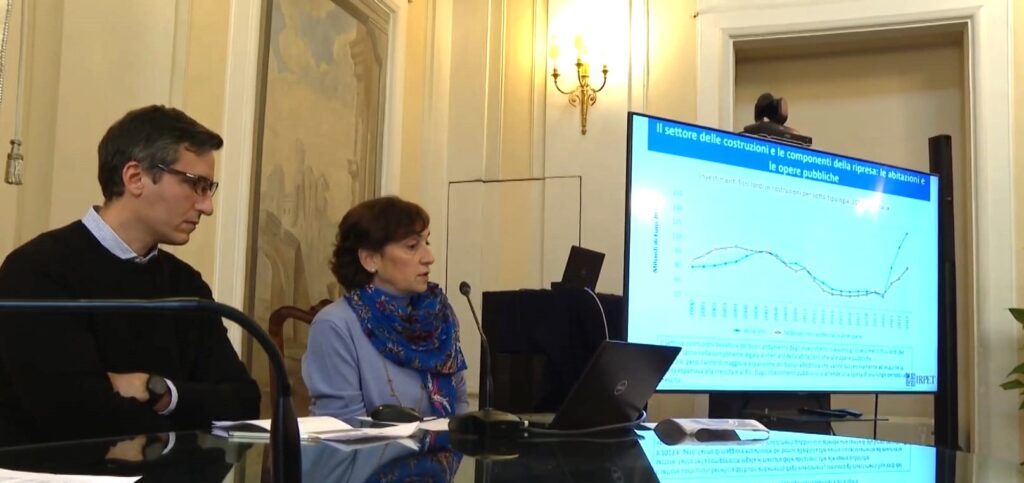
The work was edited by Giuseppe Francesco Gori, IRPET researcher, and coordinated by Patrizia Lattarulo, Head of the IRPET Public Economics Research Area.
The following individuals collaborated on the Regional Public Contracts Observatory: Andrea Bertocchini (Head of the Information System of the Regional Public Contracts Observatory and the Regional Section of the National Anti-Corruption Authority Observatory), Barbara Lasagni (Regional Public Contracts Observatory Official) and Ivana Malvaso (Contracts Sector Manager).
The annual report on public contracts in our region and in comparison with national trends, compiled by IRPET in collaboration with the Regional Observatory on Public Contracts, describes trends in the works, services and supplies sectors and the main economic variables that characterise these markets. 2024 will see the full entry into force of the new Code, with its important changes in terms of the digitisation of the entire procurement cycle, the qualification of contracting authorities and the simplification of award procedures. These changes have caught the market at a time of major growth driven by the injection of EU and national resources associated with the implementation of the PNRR (National Recovery and Resilience Plan).
This year’s Report is therefore an opportunity to take stock of the short era (2016-2022) of the previous Code, as well as the impact of the emergency regulations (Decree Laws 76/2020 and 77/2021) and, above all, the new Code (Legislative Decree 36/2023), with a look also at the possible future adjustments produced by its recent amendment (Legislative Decree 209/2024).
Chapter 2 presents the usual economic analysis, which addresses the dynamics of the market in all its components (public works, services and supplies) with a more in-depth analysis of public works. Specific insights are dedicated to the characteristics of procedures involving amounts of less than €40,000, the use of single inter-municipal procurement centres, the performance of small and medium-sized enterprises, and the life cycle of public works. Chapter 3 addresses the reform of the Public Contracts Code using an econometric approach with the aim of assessing its impact on the characteristics of the public works market. In this regard, particular attention is paid, among other aspects, to the use of non-competitive procedures (direct award) and the duration of the award phase. Chapter 4 describes the impact of the PNRR on the procurement market both from a dimensional point of view, i.e. on the volume of procedures initiated by contracting authorities, and from a qualitative point of view, i.e. by assessing, through econometric analysis, the specific characteristics of PNRR contracts in relation to, among other things, the size of the procedural choice, the probability of award to SMEs, and the duration of the award phase.
You might also be interested in...

Research by E. Conti. Survey conducted by the Center for Tourism Studies. Statistical analysis by M. L. Maitino

Report edited by G. F. Gori, coordinated by P. Lattarulo, in collaboration with the Regional Public Contracts Observatory

Report edited by E. Conti
Annual Report edited by L. Ghezzi and N. Sciclone


