


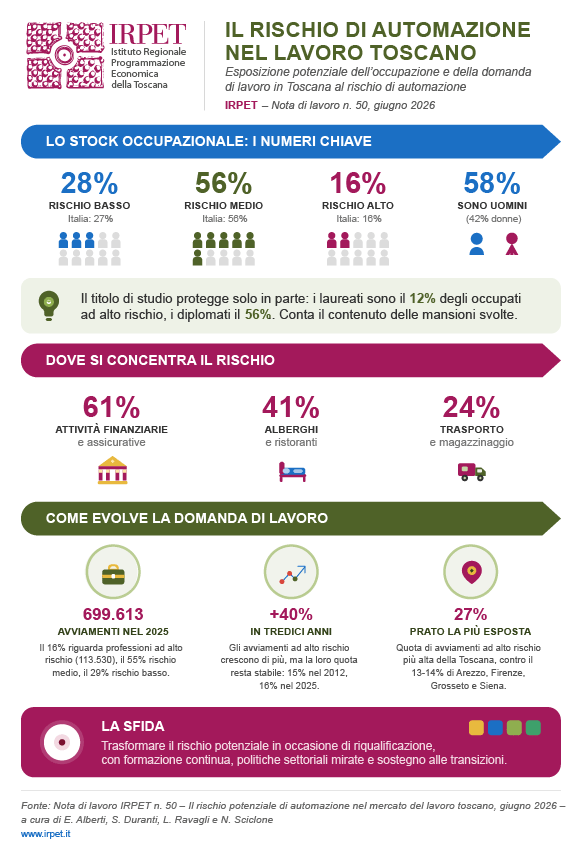
The potential risk of automation in the Tuscan labour market
Position Paper 50/2026 by E. Alberti, S. Duranti, L. Ravagli and N. Sciclone
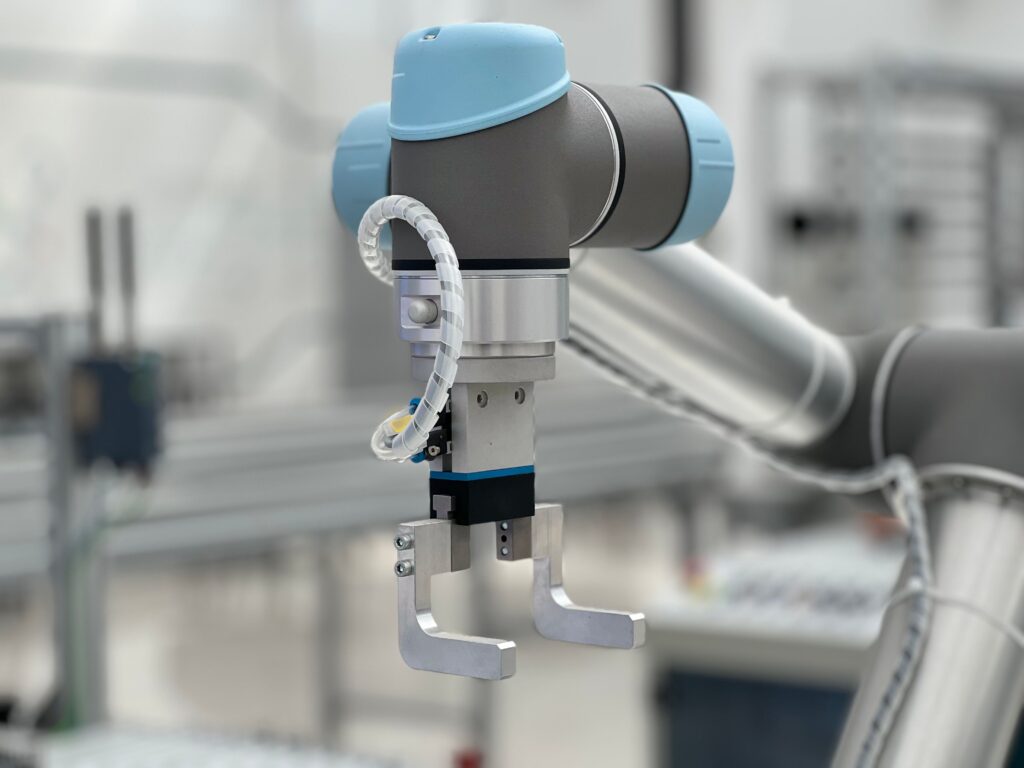
The spread of artificial intelligence and, more generally, automation technologies has brought back to the forefront of the debate a recurring issue during periods of rapid technological advancement: to what extent can innovation replace human labour, drive down wages and increase inequalities? This question is now made all the more pressing by the speed with which digital tools are being adopted in production processes and services, but it is by no means a new phenomenon in economic history (Guarascio et al., 2025; Alahakoon and Bandara, 2023; Frey and Osborne, 2017).
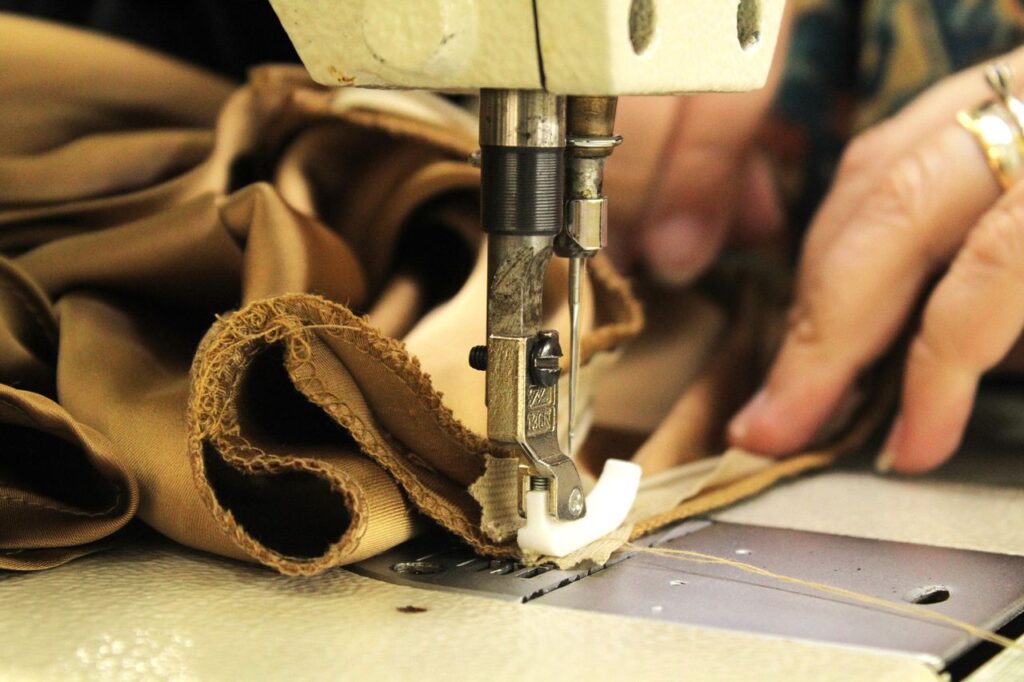
Every major technological transformation has redefined the relationship between capital and labour (Schumpeter, 2013). With the First Industrial Revolution, the mechanisation of production, mechanical looms and the steam engine profoundly altered craft-based work and fuelled fears of technological unemployment. Every major technological transformation has redefined the relationship between capital and labour (Schumpeter, 2013). With the First Industrial Revolution, the mechanisation of production, mechanical looms and the steam engine profoundly altered craft-based work and fuelled fears of technological unemployment.
The Second Industrial Revolution, based on electricity, the internal combustion engine and mass production, made it possible to break down tasks and gradually scale back many traditional craft skills.
The Third Industrial Revolution, linked to electronics, information technology and computerisation, has, on the other hand, automated an increasing proportion of repetitive tasks – particularly those relating to information and administration – thereby boosting demand for skills that complement technology.
You might also be interested in...
Position Paper 51/2026 by L. Ghezzi and N. Sciclone

Position Paper 49/2026 by M. Mariani and N. Sciclone

Position Paper 48/2026 by L. Ghezzi, M. L. Maitino, L. Piccini, and N. Sciclone

Position Paper 47/2026 by S. Duranti and N. Faraoni


