

Report by S. Iommi, survey by Istituto Ixè Srl, statistical analysis by D. Marinari. Collaboration with C. Agnoletti.
This work was commissioned from IRPET by the Managing Authorities of the ROP-ERDF and ROP-FSE+ of the Tuscany Region (Activities 1 and 2). The analyses are based not only on traditional statistical sources but also on data collected through a direct survey of significant samples of the regional population living in urban and inland areas.
The direct survey, designed by IRPET, was entrusted to the survey company Istituto Ixè Srl of Trieste.
The report was edited by Sabrina Iommi, with statistical support from Donatella Marinari. Chiara Agnoletti contributed.
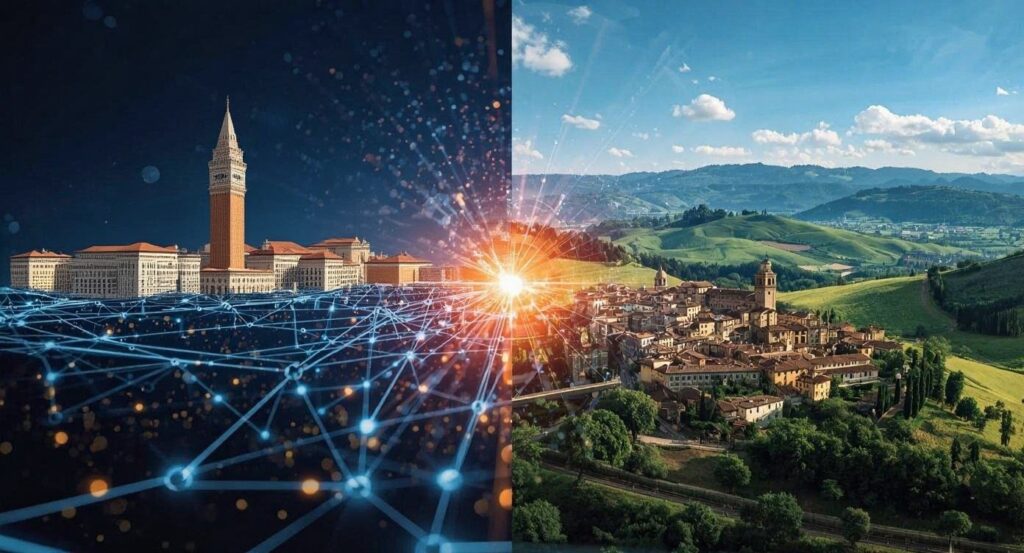
This study analyses the evolution of consumption patterns among the Tuscan population following the spread of new digital technologies (e-commerce, online services, digital platforms) and their impact on the organization of commercial supply across territories, with particular attention to the two types of areas: urban and inner.
This study analyses the evolution of consumption patterns among the Tuscan population following the spread of new digital technologies (e-commerce, online services, digital platforms) and their impact on the organization of commercial supply across territories, with particular attention to the two types of areas: urban and inner.
The methodological approach is twofold, incorporating both desk analysis and field research. The first part comprises a critical review of the latest sector literature and an analysis of the primary official statistical sources at European (Eurostat), national and regional levels for Tuscany (Istat). The second part consists of a direct survey of 3,606 Tuscany residents – in urban and inner areas – regarding behaviours and perceptions related to digital consumption.
The analysis confirms the widespread use of new technologies (almost 90% of respondents access the Internet) and the significant diffusion of more advanced behaviours, such as online shopping, although still influenced by individual skills. In fact, all online activities are less common among older populations and those with lower education levels, for whom the digital divide remains evident. Despite the opportunities offered by new technologies, some types of consumption are still largely preferred in person (e.g., purchasing food products), while for others mixed purchasing modes are increasingly common (such as clothing, electronic goods, and books). For certain services, the online mode is now largely preferred, as in the case of booking holiday accommodations, digital payments, and accessing cultural and recreational content. Multichannel interaction therefore appears to be an increasingly necessary option.
Research by C. Agnoletti. Statistical analysis by D. Marinari.
Read...Research conducted by R. Paniccià. Working group: M. Donati and T. Ferraresi. Survey conducted by Winpoll S.r.l.s.
Read...Research edited by S. Clò, A. Gugliotta, M. G. Pazienza (University of Florence), and M. Mariani (IRPET). Collaborators included N. Faraoni and L. Piccini (IRPET).
Read...REGIONAL COUNCIL BOOKS Series - Society - No. 13 | Report produced by IRPET researchers under the coordination of P. Lattarulo
Read...