


Tuscany’s challenges related to demographic, digital, and environmental transitions. 2022-2023 Report
Report by N. Sciclone, M. L. Maitino, L. Ravagli, N. Faraoni, M. Mariani and L. Piccini

This report represents IRPET’s evaluation contribution, for 2023, to the Smart Specialization Strategy for Tuscany 2021-2027, as required by Regional Government Resolution no. 1321 of November 28, 2022, Annex A. Section 1 was edited by Nicola Sciclone; Section 2 by Maria Luisa Maitino and Letizia Ravagli; Section 3 by Natalia Faraoni and Marco Mariani; Section 4 by Leonardo Piccini.
The major demographic, technological, and climate changes underway already pose significant challenges to Tuscany’s economy and society and will shape future development trajectories.
Population size and composition, as is well known, can significantly influence economic growth. Changing population characteristics can impact a system’s propensity to invest and thus its productivity. Likewise, changes in population structure impact the expressed needs and required goods/services, and thus impact foreign trade. Population aging also impacts the supply of human capital and the availability of labor.
A second trajectory of change concerns technological innovation in general and, more specifically, the digitalization of the Tuscan production system and society. Regarding the production system, digitalization potentially impacts businesses of all sizes and sectors, including agriculture, and requires changes in the way production is organized, both within each company and in interactions with suppliers, customers, stakeholders, and local communities. Given the preponderance of small and medium-sized enterprises in Tuscany’s production system and the difficulties these companies face in making investments typical of a digital economy, this is a challenging task, but nonetheless essential to maintaining the system’s competitiveness. Digitalization can generate a need for new skills, which companies can acquire by training existing staff, recruiting new ones, or by leveraging external providers such as technology intermediaries or qualified service providers. This latter aspect requires an adequate availability of digital skills in society, the labor market, and the service sector.
The third global change is climate change, with the resulting need to absorb and mitigate its effects and achieve a growth perspective fully compatible with our available resources. It is clear that the energy issue is closely linked to this change, translating into the goal of achieving a virtuous balance between energy production and import, between consumption and energy resources, and between renewable and fossil fuels. (…)
You might also be interested in...

Research by E. Conti. Survey conducted by the Center for Tourism Studies. Statistical analysis by M. L. Maitino
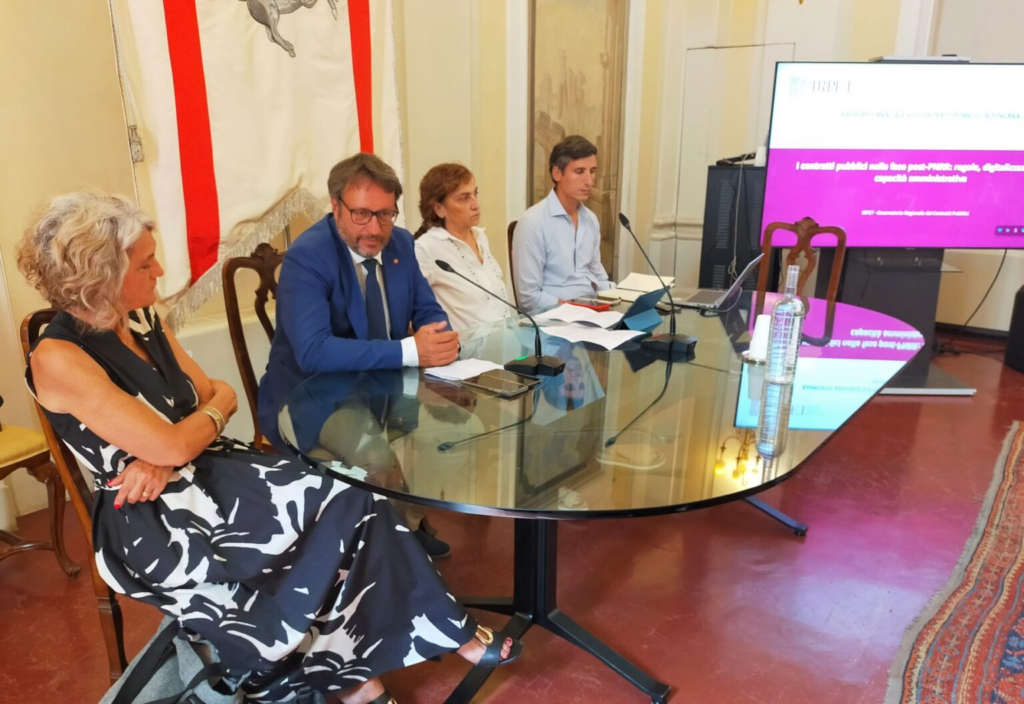
Report edited by G. F. Gori, coordinated by P. Lattarulo, in collaboration with the Regional Public Contracts Observatory

Report edited by E. Conti
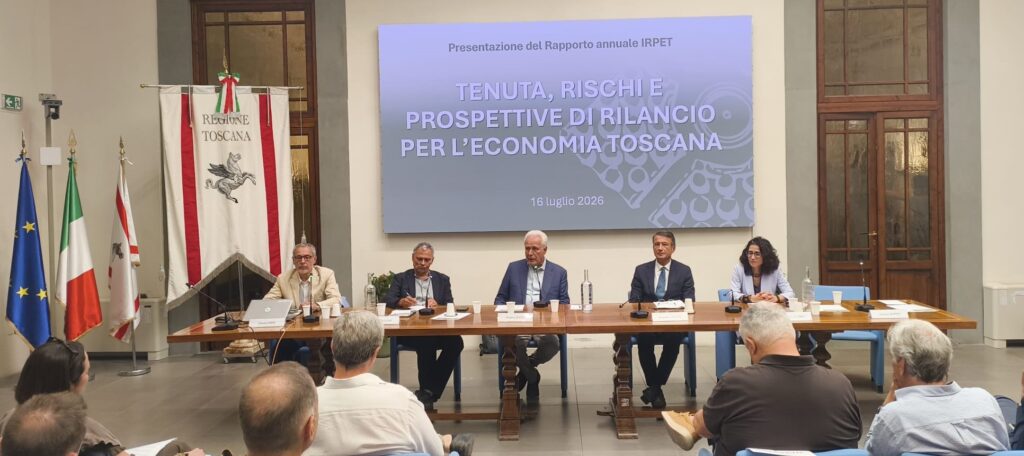
Annual Report edited by L. Ghezzi and N. Sciclone


