

Research edited by S. Clò, A. Gugliotta, M. G. Pazienza (University of Florence), and M. Mariani (IRPET). Collaborators included N. Faraoni and L. Piccini (IRPET).
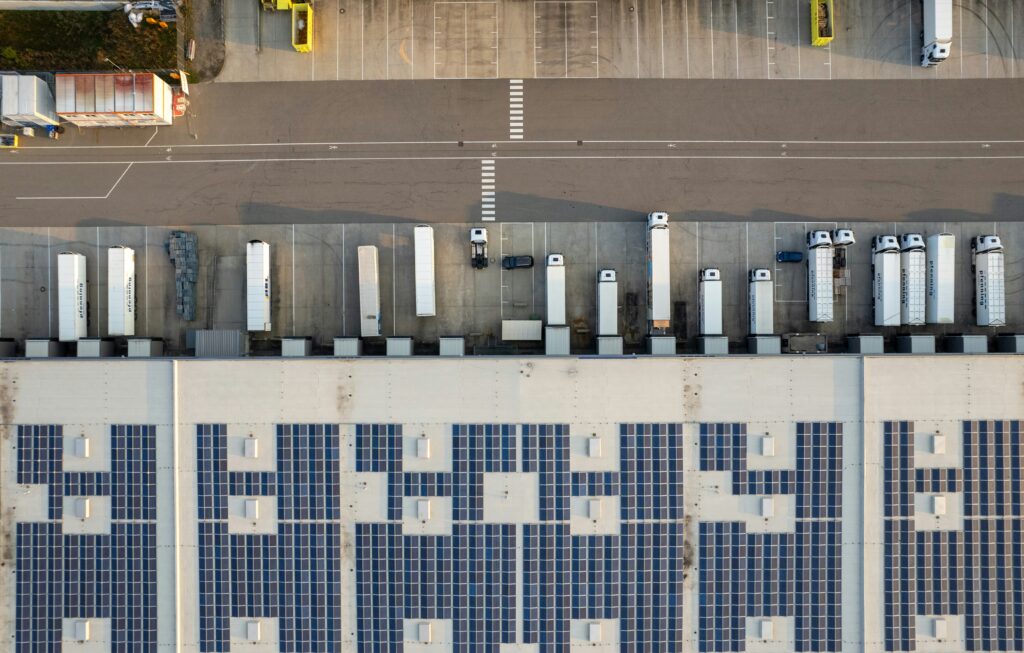
This report is the result of the joint IRPET-Tuscany Region activity “Sustainable Tuscan Enterprises between Energy Efficiency and Renewable Energy,” scheduled for 2025 (Activity No. 5.2025), and was commissioned by IRPET by the Tuscany Region’s ERDF Management Authority. The study was conceived, developed, and written by Stefano Clò (University of Florence), Agata Gugliotta (University of Florence), Marco Mariani (IRPET), and Maria Grazia Pazienza (University of Florence). Natalia Faraoni (IRPET) and Leonardo Piccini (IRPET) contributed.
This report provides an integrated analysis of the regional interventions supporting energy efficiency and renewable energy generation in Tuscan enterprises under the PR FESR 2021–2027. The evaluation combines an examination of the broader European and national energy context, an assessment of the main economic, informational and organizational barriers that shape firms’ investment decisions, a review of national policies in the same domain, and a detailed empirical analysis of the regional calls.
Participation patterns reveal a strong concentration of applications on renewable self-consumption measures, whereas energy efficiency interventions – particularly those related to production processes – are used much less frequently. This asymmetry reflects firms’ differing perceptions of intervention complexity, expected benefits and operational risk. As a result, regional schemes appear more effective in supporting standardized and easily understandable technologies, while they struggle to stimulate more complex or structurally significant investments. Participation from micro-enterprises and energy-intensive firms, although central to the regional productive system, remains limited. This suggests that existing instruments are not fully aligned with their technical and organizational needs. The multicriteria comparison with national policies further shows that national incentives tend to be more competitive in terms of procedural simplicity, support intensity and predictability of returns, with notable implications for the strategic positioning of regional instruments.
The report also finds that the technical assistance component – although widely used –is rarely associated with complex energy interventions. Overall, the evidence points to substantial room for improvement in regional policy design, through a clearer differentiation of calls by firm type, stronger complementarity with national instruments, and an enhanced provision of technical assistance to reduce barriers to energy efficiency investments.
Research by C. Agnoletti. Statistical analysis by D. Marinari.
Read...Research conducted by R. Paniccià. Working group: M. Donati and T. Ferraresi. Survey conducted by Winpoll S.r.l.s.
Read...REGIONAL COUNCIL BOOKS Series - Society - No. 13 | Report produced by IRPET researchers under the coordination of P. Lattarulo
Read...Report by S. Iommi, survey by Istituto Ixè Srl, statistical analysis by D. Marinari. Collaboration with C. Agnoletti.
Read...