

Report by R. Danielis, M. Scorrano (Università di Trieste)
The study is part of the joint IRPET-Tuscany Region activities for 2024 and is being conducted as technical assistance to the ERDF Managing Authority (Activity No. 3.2024). The research was led by Romeo Danielis and Mariangela Scorrano (Department of Economics, Business, Mathematics, and Statistics – University of Trieste) in the Public Economics and Infrastructure Research Area of IRPET, coordinated by Patrizia Lattarulo. The working group included Leonardo Piccini and Giuseppe Francesco Gori of IRPET and the Istituto IXE’ S.r.l.
In the context of discussions and projects aimed at reducing the use of private vehicles in favor of public transport, reducing congestion, improving territorial accessibility, and environmental sustainability, the expansion of the tram network plays a significant role. In this regard, it is important to understand the current and potential use of the tram service and the appreciation of its features.
To this end, commissioned by the Regional Institute for Economic Planning of Tuscany (IRPET), the research group designed, implemented, and analyzed the results of a survey conducted in June-July 2024 by administering a questionnaire to a sample of 1,347 respondents.
The objectives of the survey can be grouped into three main typologies, each of which is represented by a group of questions in the questionnaire.
The first group consisted of collecting information on typical travel within the Florence area in relation to the chosen transportation mode (walking, car, scooter, bicycle, train, bus, or tram). They were asked to describe the characteristics of this trip in terms of time (from home to the bus or stop, en route, finding parking, and reaching the destination) and overall cost. Additionally, respondents were asked which other modes were available (even if not chosen) and what time and cost characteristics these had. In theoretical terms, the objective is to identify respondents’ actual preferences and reconstruct the choice process.
Since actual choices are influenced by the availability of transportation, such as the presence of a tram station in the area where the respondent lives or the area they usually travel to, the second set of objectives aims to identify the hypothetical choices of respondents, that is, what they would choose if all transportation modes were available. To answer these questions, we used the stated preferences methodology, in which respondents are asked to state their choice among hypothetical options presented in the form of scenarios. From these hypothetical choices, the structure of respondents’ preferences is inferred through econometric models and estimates. The estimated model, in addition to providing information on the importance of the characteristics of the different transportation options in terms of time, cost, and frequency, lends itself to various uses, such as estimating the value of time or the modal share of different transportation modes in alternative scenarios. In short, this study allows us to answer the question of how Florentines would react to an extension of the tram network, given its characteristics.
The third group of research questions focuses on interviewees’ opinions regarding the expansion of the tram network and its financing, including the introduction of a specific tax. For this, as for the other research questions, we explored both the prevalent responses provided by the sample of interviewees and their dependence on occupation, usual travel distance, area of residence, distance from the tram station, and the origin and destination of the trip.
Research by C. Agnoletti. Statistical analysis by D. Marinari.
Read...Research conducted by R. Paniccià. Working group: M. Donati and T. Ferraresi. Survey conducted by Winpoll S.r.l.s.
Read...Research edited by S. Clò, A. Gugliotta, M. G. Pazienza (University of Florence), and M. Mariani (IRPET). Collaborators included N. Faraoni and L. Piccini (IRPET).
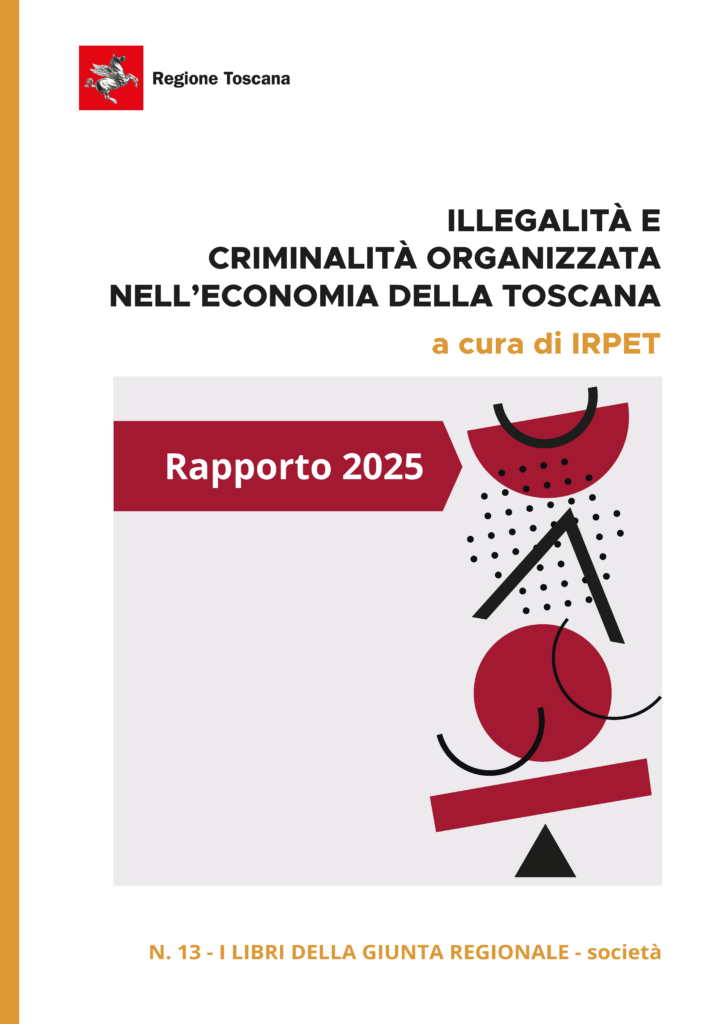
Read...REGIONAL COUNCIL BOOKS Series - Society - No. 13 | Report produced by IRPET researchers under the coordination of P. Lattarulo
Read...